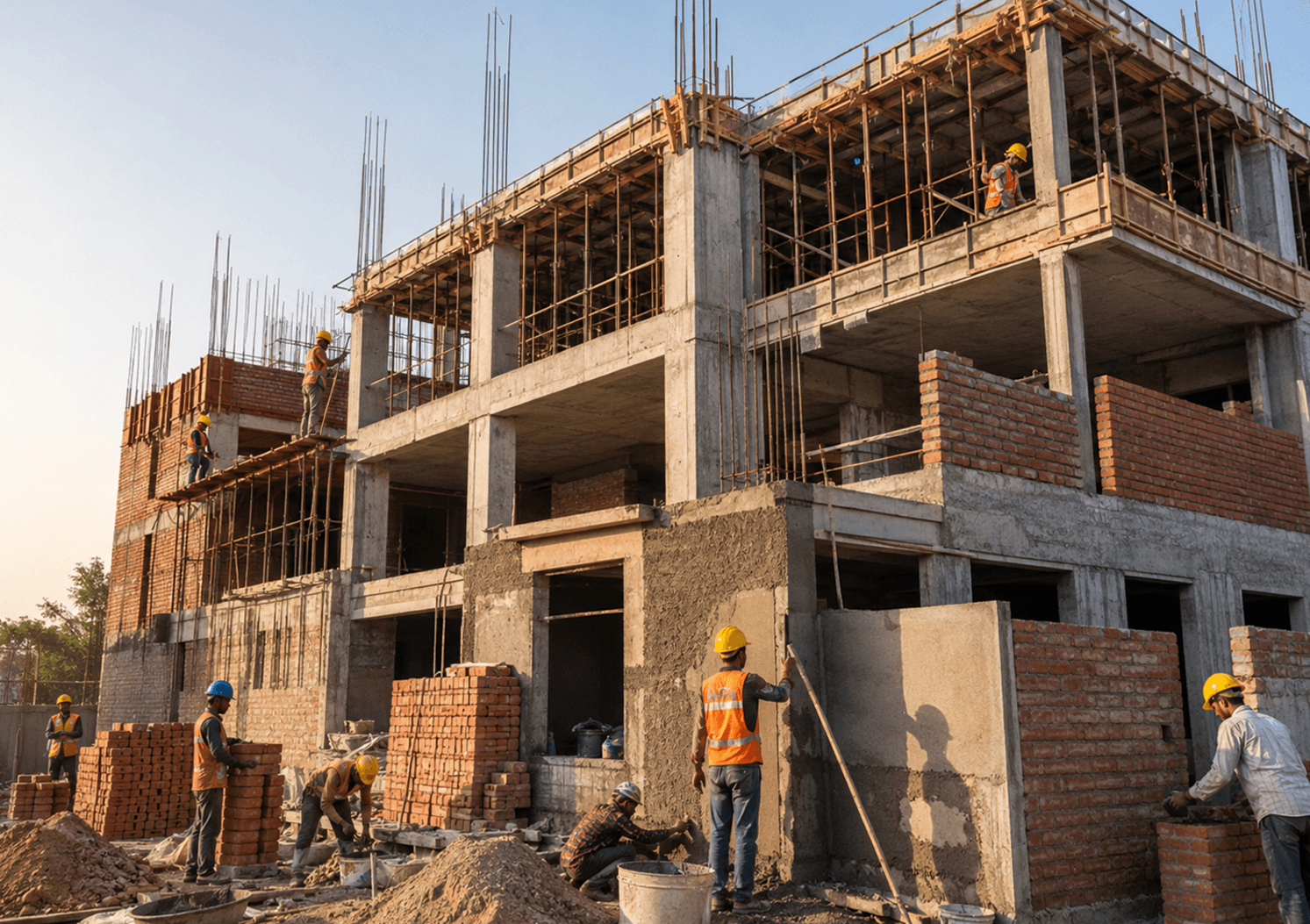
A good drawing doesn’t build itself — it needs a sequenced plan, a realistic schedule, and a team that executes to both. Jusal Construction converts architectural and structural drawings into a phase-wise execution plan, then runs the site against it, so what gets built matches what was designed, on the timeline you were promised.
Before any work starts, we break your drawings down into a phase-wise schedule covering material procurement, labour deployment, and inspection checkpoints. That plan becomes the working document for the site — reviewed and updated as the project progresses, not filed away after kickoff.
Site clearing and excavation
Earthwork and leveling
Foundation construction
RCC (reinforced cement concrete) work
Brickwork and blockwork
Plastering and masonry
Steel reinforcement and shuttering/formwork
Flooring and tiling
Waterproofing
Painting and finishing work
Roads, pavements, and drainage works
Compound walls and retaining walls
Renovation and repair works
Project supervision and labor management
Material procurement and quality control
HOW WE RUN AN EXECUTION SITE
Execution sites run against the phase-wise plan built at kickoff, with material and labour deployment scheduled ahead of need rather than reacted to. Site supervisors track actual progress against planned progress daily, so schedule slippage is caught early, not at handover.
Phase-wise execution schedule built from your drawings
Material and labour deployment planned ahead of need
Dedicated site supervisor for every project
Weekly progress-versus-plan reporting
WHY BUILDERS CHOOSE JUSAL
Experience converting architectural and structural drawings into buildable schedules
Progress tracked against plan, not just tracked
Transparent costing tied to the agreed execution plan
PLANNED BEFORE WE BREAK GROUND
Every project starts with a phase-wise execution schedule built from your drawings, so the site runs to plan from day one.
ONE KEY, START TO FINISH
Once the plan is set, execution is ours to run — material deployment, labour, and inspections. You don't track work across phases yourself — you get one execution partner and one handover at the end.